Brush Clearing & Pasture Reclamation in Powhatan & Goochland, VA
An unmowed field in Powhatan or Goochland doesn't stay a field for long. Within a few years it's cedar, sweetgum, briars, and autumn olive, and within ten it's young woods. Brush clearing takes it back, but the part that decides whether it stays taken back is what happens in the two years after the machine leaves. Here's how the clearing works, what comes back, and how to plan for it.
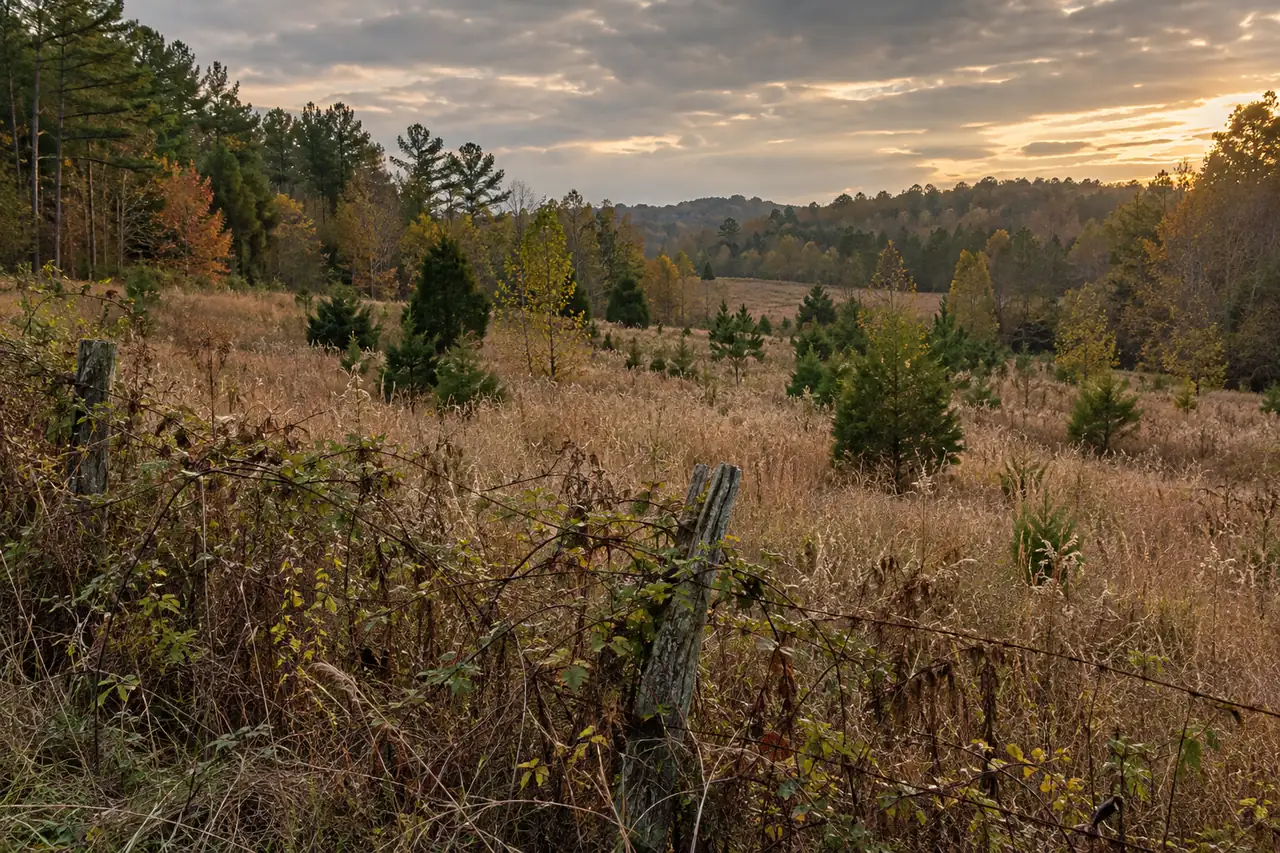
Three ways to clear brush, by how far gone the field is
- Bush-hogging. A tractor with a rotary cutter handles weeds, briars, and woody stems up to an inch or two. If the field is just shaggy, this is all it needs, and it's the cheapest option by far. It doesn't touch anything with a trunk.
- Forestry mulching. Once cedar, sweetgum, and pine have real trunks, a mulching head on a skid steer or tracked machine grinds them into chips where they stand, stumps cut near grade and roots left in the ground. This is the workhorse for pasture reclamation: it handles stems up to roughly 6 to 8 inches, it leaves the soil intact, and there's nothing to burn.
- Clearing and grubbing. If the field has become true woods with trees too big to mulch, or you want bare dirt to reseed with no stumps at all, the trees are cut and an excavator pulls the stumps. More cost, more soil disturbance, debris to deal with, and the county's 10,000 square foot permit rules apply. Most pasture jobs don't need this.
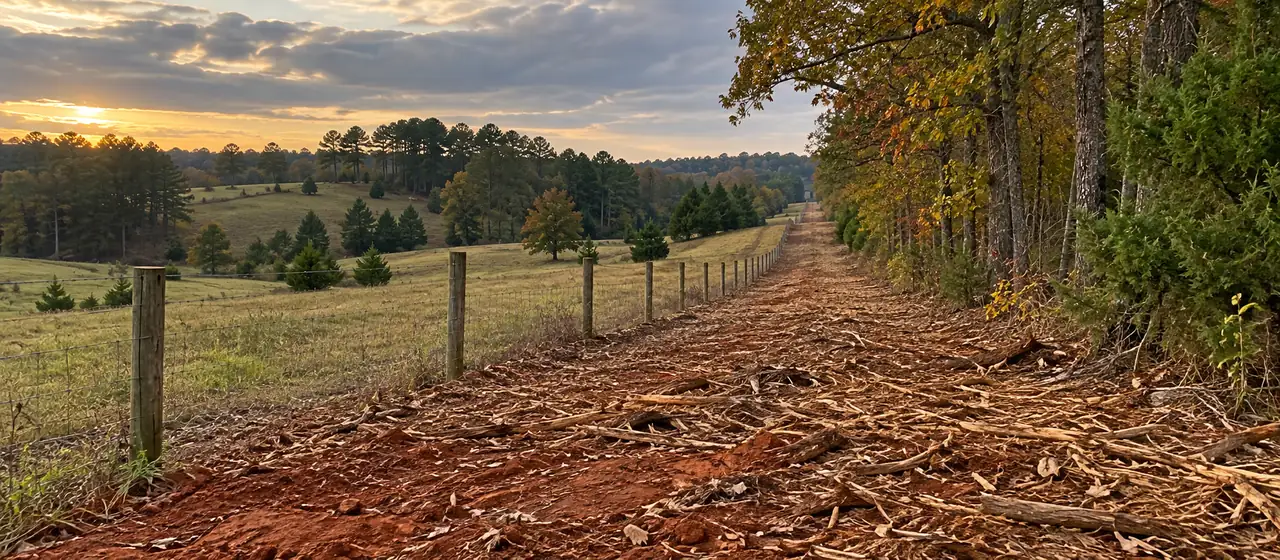
Fence lines, field edges, and trails are usually mulching jobs: the machine runs the line, chews the growth that's shading out the grass and pushing on the wire, and leaves a mulched strip a tractor can mow from then on.
What grows back, and how hard
Clearing cuts plants; it doesn't kill most of them. Whether a reclaimed pasture holds depends on which species were in it.
- Eastern red cedar and pines don't resprout from a cut stump. Cut them and they're gone, which is why a cedar field is the easiest kind to reclaim. New seedlings will still blow in from neighboring trees.
- Sweetgum comes back from root sprouts, not just the stump. The U.S. Forest Service's species guide says regeneration after cutting can be expected to come from root sprouts, which means a cut sweetgum can produce a ring of new stems the next summer.
- Red maple sprouts from the stump within two to six weeks of cutting, per the Forest Service, and the sprouts grow faster than seedlings.
- Black locust sprouts from both stump and roots, especially after cutting, and can form thickets of suckers.
- Tree-of-heaven is the hard one. Virginia Cooperative Extension's control guide is blunt: cutting alone will not kill it. It needs a herbicide treatment, by basal bark, foliar spray, or on the fresh-cut stump.
- Autumn olive resprouts from any roots left behind, per Extension, which recommends pulling small plants when the soil is moist and treating larger ones with herbicide on the foliage or cut stump.
- Multiflora rose can be worn down by repeated mowing, several times a season for more than one year, or by cut-stump and foliar herbicide treatment, repeated the following seasons.
Extension's general advice for hardwoods is that cut stumps resprout unless the fresh cut is treated with herbicide promptly. Some mulching contractors treat as they go; many don't. Ask, and ask what they'd recommend for the species on your field.
The two-year plan
A reclaimed field holds when it's mowed before the sprouts get woody again. The pattern that works around here:
- Clear in late summer, fall, or winter when the ground is dry and you can see what you're working with.
- Treat the species that need it: tree-of-heaven and autumn olive stumps, and sweetgum and locust if you want them gone rather than mowed forever.
- Let the mulch settle over winter. Where it's thin, grass comes through on its own; where it's deep, rake or disk before seeding.
- Seed pasture grass in the right window for the type, and lime and fertilize based on a soil test. Extension's soil testing lab is inexpensive and the results tell you exactly what the field needs.
- Mow two or three times the first summer and again the second, before sprouts reach knee height. After that, a normal mowing schedule keeps it.
Skip the mowing and the sweetgum sprouts will be waist high by the second summer, and you're back to needing a machine.
Permits for agricultural clearing
Virginia's erosion and stormwater law (Va. Code § 62.1-44.15:34) exempts clearing of land specifically for bona fide agricultural purposes, along with tilling, planting, and harvesting crops, from the land disturbance permit rules. Reclaiming pasture for livestock or hay generally fits. Two cautions: Goochland's permit paperwork includes an application for agricultural land disturbance that isn't exempt, so the county does draw lines, and grubbing in a wetland or a creek's floodplain is regulated no matter what the land is for. If the job involves pushing stumps near water, or you're not sure whether the county considers your use agricultural, a call to the county environmental office before the work is cheap insurance. Burning the brush still needs the county burn permit in both counties.
USDA's Natural Resources Conservation Service has a brush management practice standard for exactly this kind of work on pasture and hayland. Virginia's EQIP program pays set rates for approved conservation practices on working farms. Whether your pasture work qualifies for cost-share is a question for the NRCS field office that serves Powhatan and Goochland; the program needs a farm number from the Farm Service Agency and applications are taken year-round.
What brush clearing costs
Brush is the one category where national guides disagree most, because "brush" means anything from tall weeds to a cedar thicket. HomeGuide's late-2025 figures put brush clearing at $800 to $3,000 per acre and forestry mulching at $500 to $1,000 or more; Lawn Love's figures run $330 to $630 per acre for brush; HomeAdvisor's and Angi's 2026 figures for light brush go as low as $20 to $200 per acre, which is bush-hogging territory. For mulching real woody growth, Richmond-area contractors publishing prices in 2026 listed roughly $1,200 to $3,500 per acre, and one listed fence line clearing by the foot in the low single dollars.
Acreage matters more here than on any other job, because the per-acre rate drops as the machine stays on site longer, and a one-acre job carries the same transport cost as a ten-acre one. Those are national figures, not Powhatan or Goochland quotes. The written quote from a contractor who has walked your field is the number that counts.
Pasture and brush questions
Can I just bush-hog it?
If the biggest stems are thumb-sized, yes, and you should. Once there are trunks a rotary cutter bounces off of, it's a mulching job. A field with both gets mulched once, then bush-hogged from then on.
Will cattle or horses be fine on a mulched field?
Once grass is established, yes. Right after mulching there are sharp cut stems a couple of inches tall, and horse owners in particular tend to wait a season or ask the operator to grind flush. Flag any species you don't want in a pasture, like black locust or cherry, so they get treated rather than left to sprout.
Can I keep some trees for shade?
Easily with a mulcher; flag the keepers. Oaks and big cedars left standing in a pasture are normal here. With an excavator it's harder, because grubbing near a tree's roots can kill it.
When is the best time of year?
Dry ground is the main thing; machines rut wet fields. Late summer through winter is common. Mulching in winter also means the chips have time to settle before spring seeding. Cut-stump herbicide treatments work best when plants are actively growing, which is one reason some contractors prefer late summer or early fall.
How we help
Call or send a short request with where the field is, roughly how many acres, and what's growing in it. We connect you with one independent contractor who does this kind of work in your part of the county. They walk the field and give you a quote, and you decide. There's no charge for the referral.
Want a local contractor to walk your land?
Call or send a short request. There's no charge for the referral.