Lot Clearing for a House Site in Powhatan & Goochland, VA
Clearing a lot for a new house in Powhatan or Goochland is more than cutting trees. The stumps and roots have to come out of the building footprint, the ground has to be graded, the debris has to go somewhere, the county wants erosion controls in place, and the septic drainfield has to be protected from the very equipment doing the work. Here's what the job involves and what to settle before the first machine shows up.
What clearing a house site involves
A typical lot clearing job in this area runs in this order:
- Layout. The house footprint, driveway, well, and septic drainfield (plus its reserve area) are staked out. Trees to keep and lines not to cross get flagged.
- Timber comes down. Trees are felled. If there's enough merchantable pine or hardwood, a logger may buy it first and leave the stumps and tops for the clearing contractor.
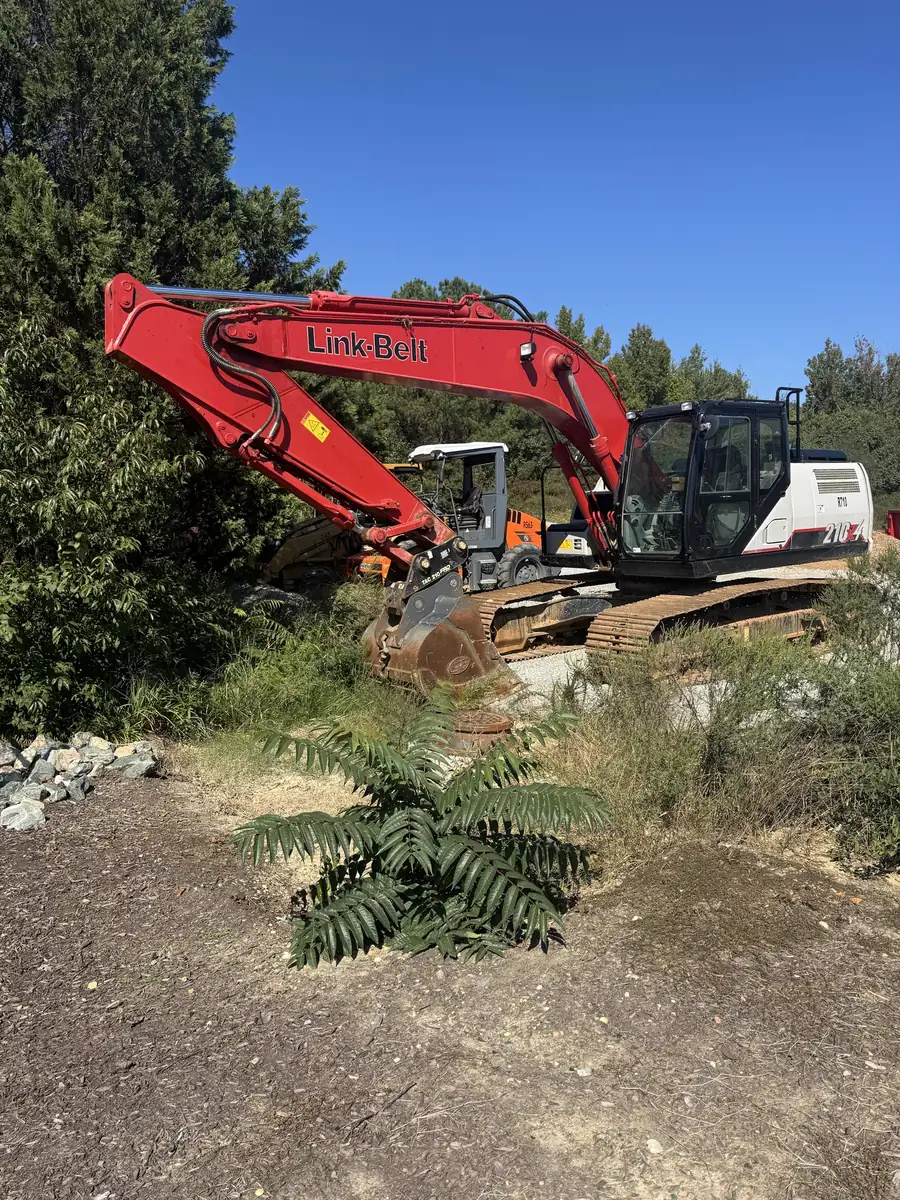
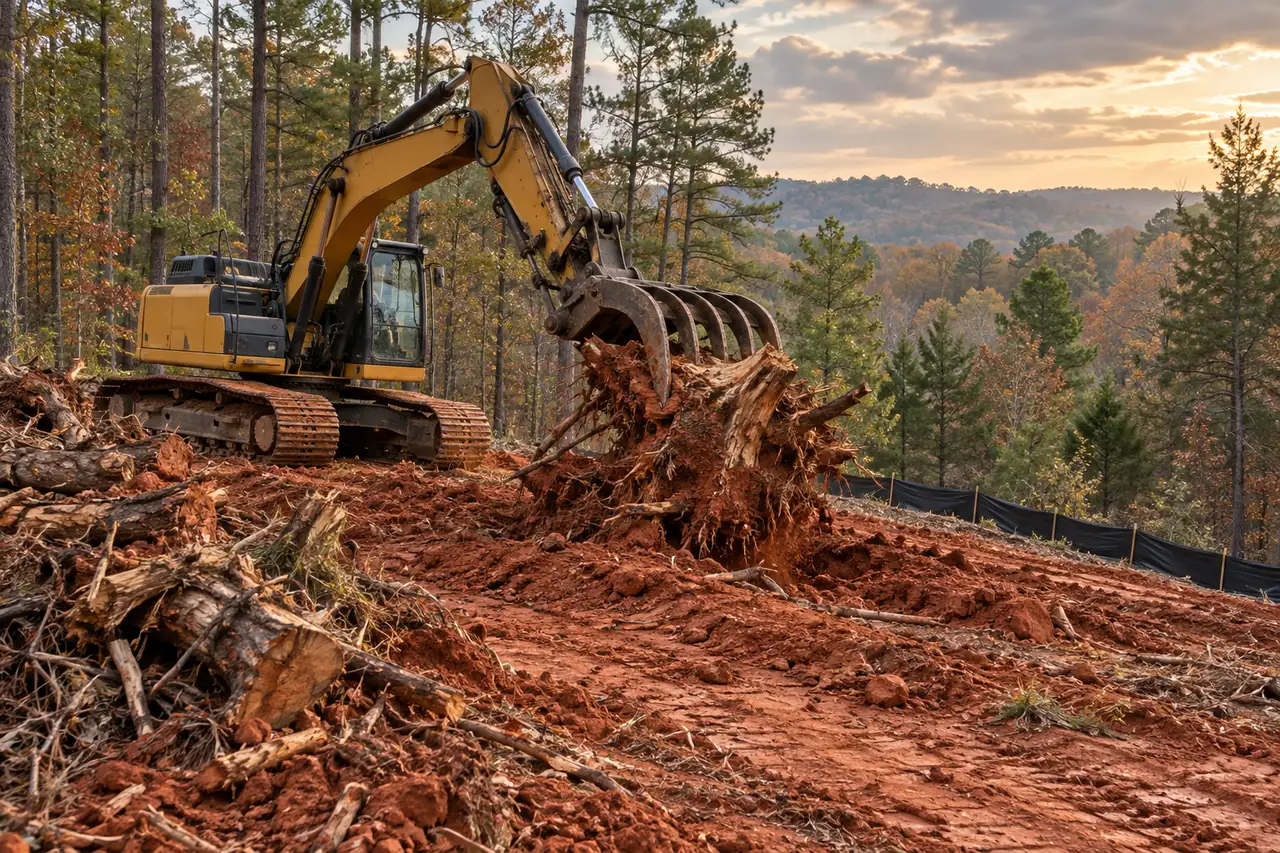
- Grubbing. An excavator or dozer pulls the stumps and major roots out of the ground inside the footprint. Virginia Cooperative Extension notes that dozer grubbing nearly always destroys the topsoil, while an excavator with a root rake disturbs less; it's worth asking which the contractor will use and where the topsoil ends up.
- Debris disposal. Stumps, roots, and brush are burned on site under a county permit, ground up, buried, or hauled off. This is often the biggest line on the quote.
- Erosion controls. A stone construction entrance where the drive meets the road and silt fence on the downhill side. Powhatan makes the erosion control inspection the first inspection, before any building inspection, and Goochland requires its permit in hand before any disturbance starts.
- Rough grading. The pad and drive are shaped, and holes from stumps are filled and compacted so they don't settle later.
- Stabilizing. Disturbed ground outside the pad gets topsoil, seed, and straw so it doesn't wash.
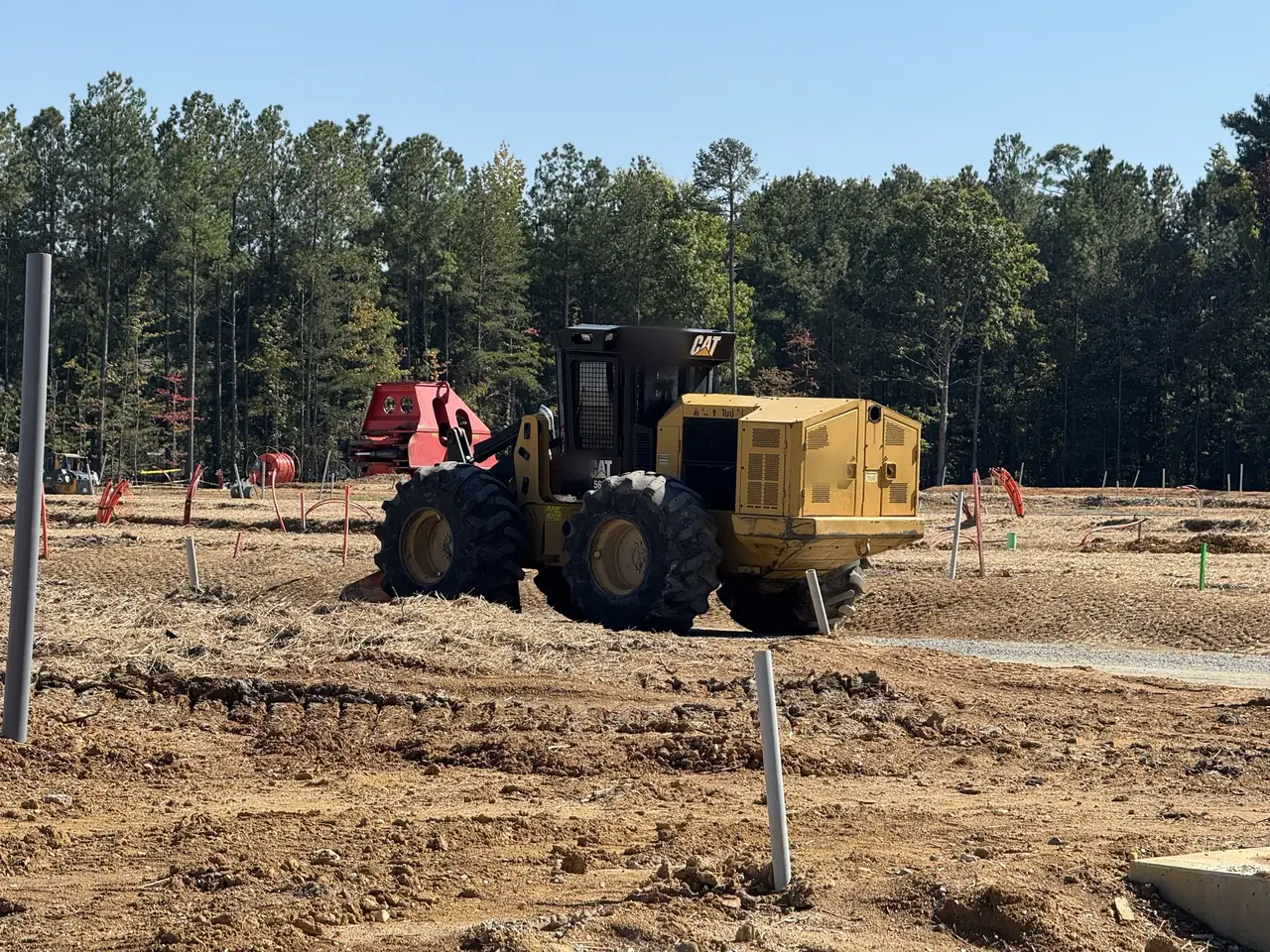
On a wooded parcel, many owners mulch the rest of the acreage with a forestry mulcher and grub only the footprint, which keeps the cost down and the soil intact.
The 10,000 square foot line
Almost every house site in Powhatan or Goochland crosses it. A house pad, a driveway, and a drainfield together add up to well over 10,000 square feet of disturbed ground, which is the point where both counties require a land disturbance permit under Virginia's erosion and stormwater law.
- Powhatan: for a single-family home disturbing less than an acre, the county's Environmental Management office uses an Agreement in Lieu of a Plan, submitted with the building permit. The owner agrees to install the stone entrance and silt fence, and the erosion control inspection is the first inspection before any building inspection. It isn't available if the disturbance reaches an acre, if creeks or wetlands are on or next to the site, if fill is hauled in or out, or on steep slopes; those need a full plan.
- Goochland: the Environmental & Land Development office requires its Erosion and Stormwater Management Permit at 10,000 square feet and offers an agreement in lieu for single-family homes. The county must issue both the agreement and the building permit before any disturbance, and its paperwork says that includes driveway work. Over 10,000 square feet, the owner names a certified Responsible Land Disturber on the form. The agreement isn't available at five acres or more.
- An acre or more in either county adds state construction stormwater permit coverage from DEQ and a stormwater pollution prevention plan.
Your builder usually pulls these with the building permit, but if you're clearing ahead of choosing a builder, the clearing contractor and the county need to be on the same page first. The permits guide has fees, forms, and phone numbers.
Protect the drainfield before anything else
Outside a narrow stretch of Powhatan along the Route 60 corridor and the Courthouse area, there's no public sewer, and most of Goochland is on wells too. That means your lot's septic drainfield is the single most fragile part of the whole project, and it's at risk during clearing.
Virginia's sewage handling regulations (12VAC5-610-700) say special caution must be taken in letting wheeled and tracked vehicles cross the absorption area, because compaction changes the soil structure the system depends on; traffic that damages the soil can be grounds to reject the site or revoke the permit. No structures may be placed over the drainfield, and the area has to be staked before final grading. Every system also needs a reserve area held back for a future replacement field.
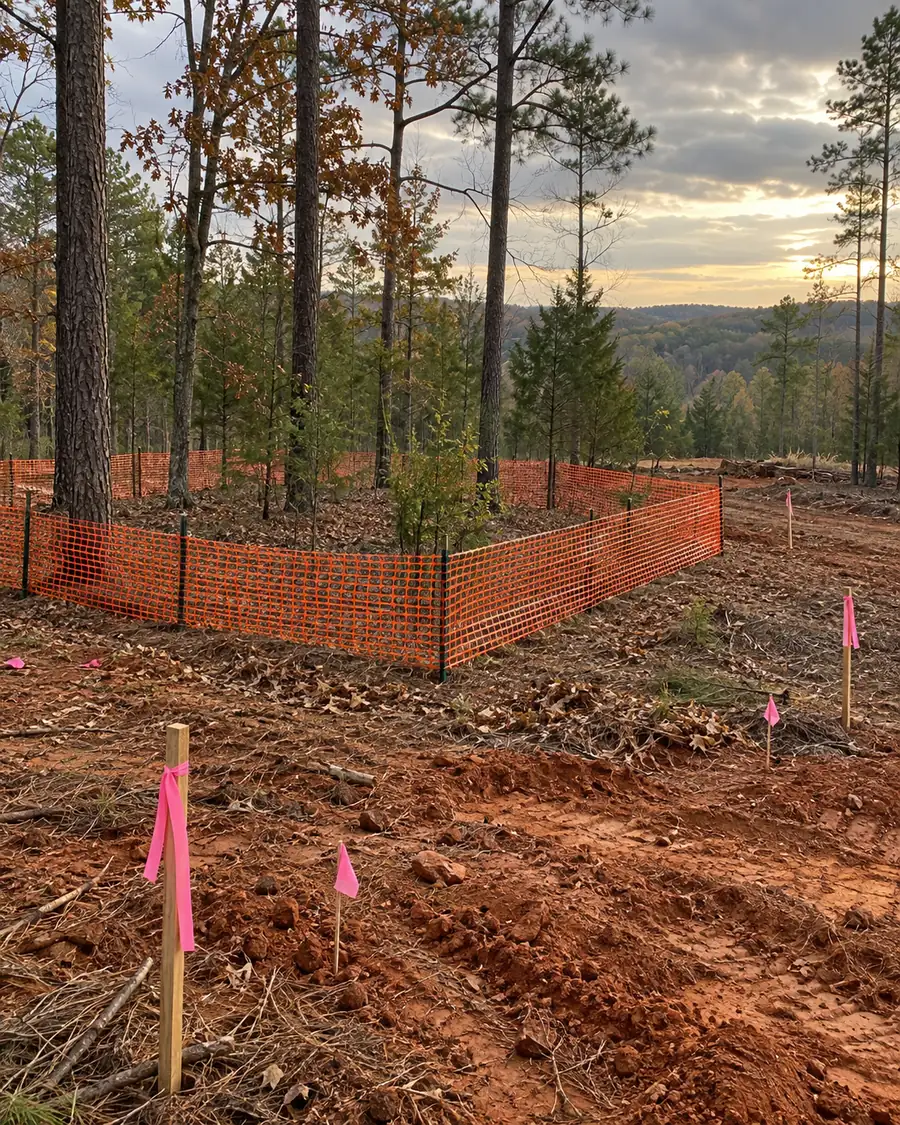
In practice: get the soil evaluation and septic permit done first, have the drainfield and reserve area staked and fenced with orange safety fence, and tell the clearing contractor in writing that no equipment crosses it. Trees inside the drainfield are usually cut and the stumps left or ground, not pulled, so the soil isn't torn up. If the house site is being cleared before the septic work, the drainfield area shouldn't be cleared at all until the health department has signed off on it.
What to do with the debris
A cleared acre of mature woods produces a lot of stumps and tops, and the choice of what to do with them changes the price more than almost anything else.
- Burn on site. Cheapest, but regulated. Powhatan requires a land-clearing burn permit, applied for ten days ahead, with piles 500 feet from any occupied building unless the occupants sign off. Goochland requires a permit for all land-clearing burns, 750 feet from homes unless the neighbor agrees, and a call to the Sheriff's non-emergency line before each burn. Between February 15 and April 30, Virginia's 4 PM law restricts burning near woods to 4 PM to midnight. Big stump piles can smolder for days.
- Grind. A tub or horizontal grinder turns the pile into chips you can spread or keep. More expensive than burning, no smoke, no permit.
- Bury. Stumps are sometimes buried in a pit on the property. Extension warns the hole sinks as the wood rots, so never under anything, and some counties restrict it. Ask.
- Haul. Cleanest and most expensive: national guides put dumpster and hauling costs in the hundreds of dollars per load, and a wooded acre is many loads.
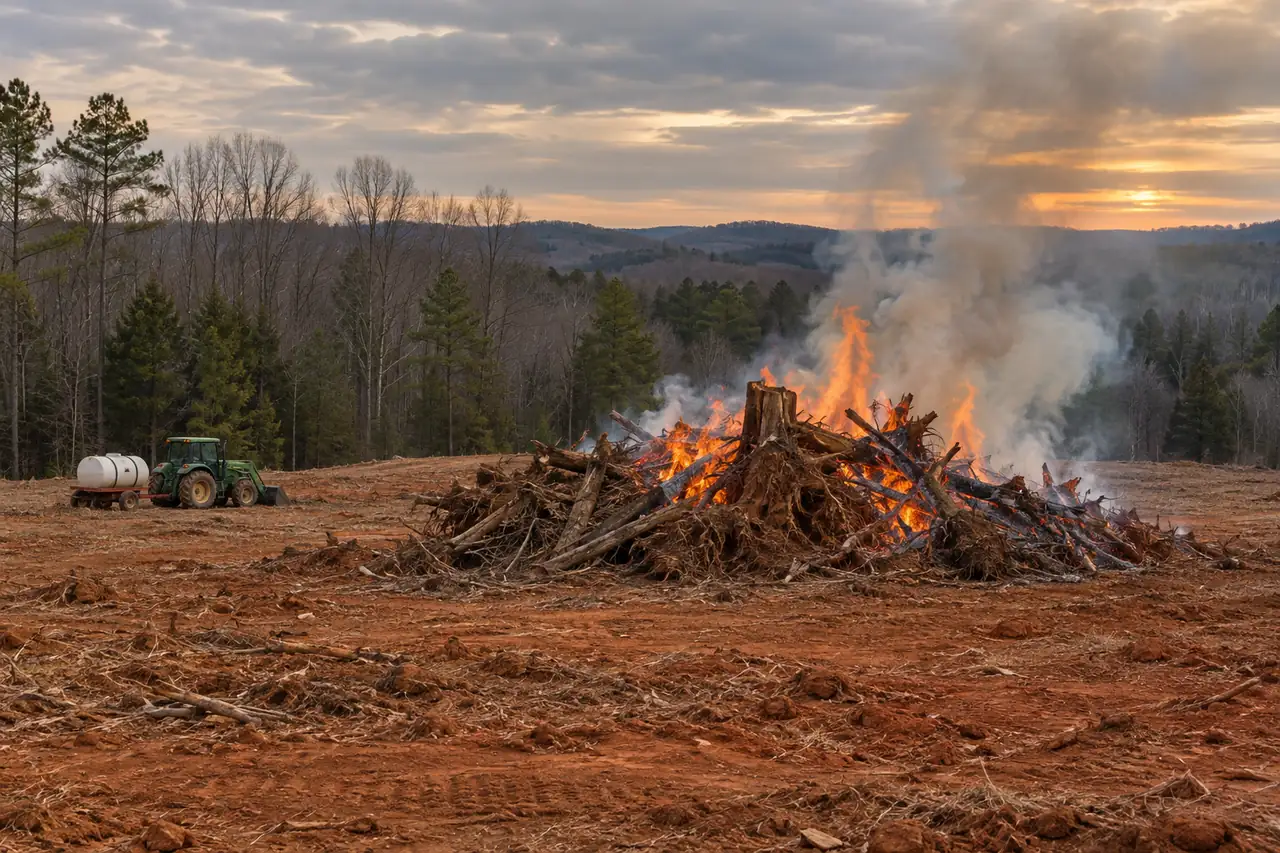
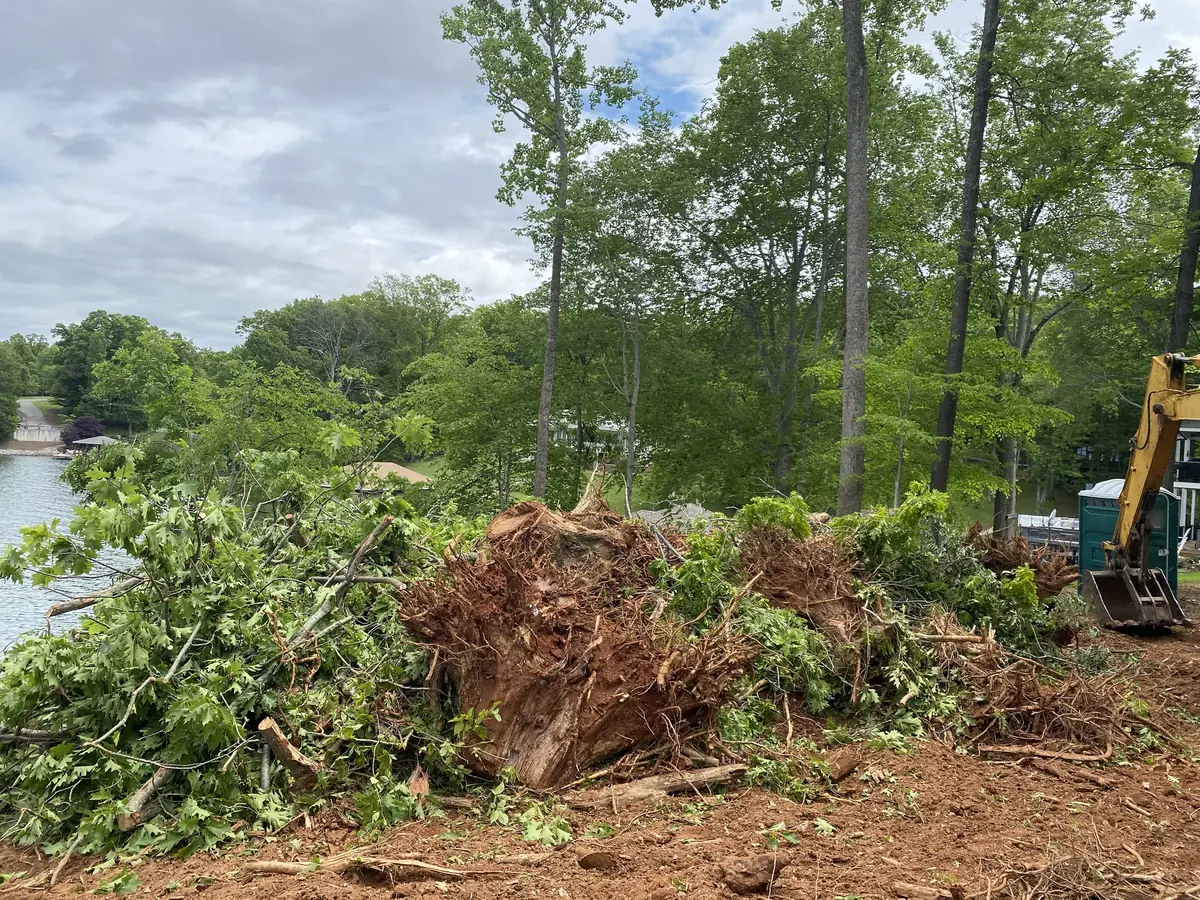
USDA's land clearing standard recommends debris piles at least 100 feet from woods, buildings, and roads, and keeping heavy equipment off saturated ground. Both are good instructions for the contractor.
What lot clearing costs
National guides vary widely because lots vary widely. Angi's 2026 data puts lightly wooded clearing at $500 to $2,000 per acre and dense woods at $3,600 to $5,600, with an average project around $3,780. HomeGuide's late-2025 figures run $1,200 to $2,500 for light growth, $2,500 to $4,500 for moderate, and $4,500 to $8,000 for heavy timber. A Richmond-area contractor's published 2026 price page listed light lot clearing at $1,500 to $3,500 and heavy clearing at $5,000 to $12,000 or more. Stumps, grubbing, hauling, and grading are what push a job toward the top of those ranges.
Those are national and regional figures, not Powhatan or Goochland quotes. The written quote from a contractor who has walked your lot is the number that counts. The cost guide explains how to compare two quotes that aren't written the same way.
What commonly goes wrong
- Equipment on the drainfield. Compaction can cost you the septic site, and a new site may not exist on a small lot.
- Stump holes filled with stumps. Buried wood rots and the pad or driveway settles over it years later. Holes in the footprint should be filled with compacted soil, not debris.
- Topsoil pushed into the debris pile. You end up buying topsoil back for the lawn. Ask that it be stockpiled.
- Clearing before the permit. Goochland's rules say no disturbance, including the driveway, until the agreement and building permit are issued. Starting early can mean a stop-work order and fines.
- No silt fence until the inspector asks. One hard storm puts your topsoil in the neighbor's creek.
- Cutting into a creek buffer or wetland. Goochland's permit exemption doesn't apply in floodplains, wetlands, or slopes of 15 percent or more, and grubbing in a wetland needs federal and state permits regardless of county.
- Nobody called 811. Grubbing is excavation. Virginia 811 marks are free and take three working days.
- Keeper trees damaged by root cutting. An excavator working within a tree's drip line can kill a tree that looks fine for two more summers.
Before the equipment arrives: a checklist
- Property corners located, and the lines flagged where clearing runs near them.
- House, drive, well, drainfield, and reserve area staked; drainfield and reserve fenced off.
- Trees to keep flagged; agree how close equipment will work to them.
- Land disturbance paperwork settled with the county, or the builder confirmed to be handling it.
- Virginia 811 locate requested at least three working days ahead.
- Debris plan chosen and, if burning, the county burn permit in hand.
- Decision on timber: sold to a logger first, kept as firewood, or included in the clearing.
- Written quote that says what's included: grubbing depth, debris disposal, grading, topsoil, seeding, and erosion controls.
Lot clearing questions
Can I clear the lot myself?
Virginia's contractor licensing law exempts an owner working on their own primary residence, and the county permits are issued to owners too. But grubbing and grading a house site is heavy-equipment work with real risk, and the erosion-control and drainfield rules apply to you the same as to a contractor. Most owners hire it out and handle the brush themselves.
Should I sell the timber first?
If there's a real stand of pine or sawtimber hardwood, possibly. Small lots and scattered trees usually don't justify a logger's move-in. The Virginia Department of Forestry's selling timber guidance covers sale methods and says never to use a verbal agreement. The logger, not you, is responsible for notifying the State Forester of a commercial harvest.
How long does it take?
Clearing and grubbing a one- or two-acre site is often a few days of machine work, plus whatever time the burn piles need and any wait for dry weather. Permit review adds time up front: Powhatan asks for burn permit applications ten days ahead, and Goochland processes its burn permits within ten days.
What about the driveway?
A long drive through the woods is its own clearing job and counts toward the 10,000 square feet. Goochland specifically includes driveway work in what can't start before the permit. The stone construction entrance at the road is usually the first thing built.
How we help
Call or send a short request and tell us about the lot. We connect you with one independent contractor who clears and grades house sites in your part of the county. They walk the property and give you a written quote, and you decide. There's no charge for the referral.
Want a local contractor to walk your land?
Call or send a short request. There's no charge for the referral.